
Guide ·
Paintless Dent Repair: When It Works and When It Doesn’t
Quick answer
Paintless dent repair works when the paint is intact and the metal has not been stretched or sharply creased: door dings, many small and medium dents, and most hail dents. If the paint is cracked or the dent is a sharp crease, the panel needs conventional repair and paint.
What paintless dent repair is
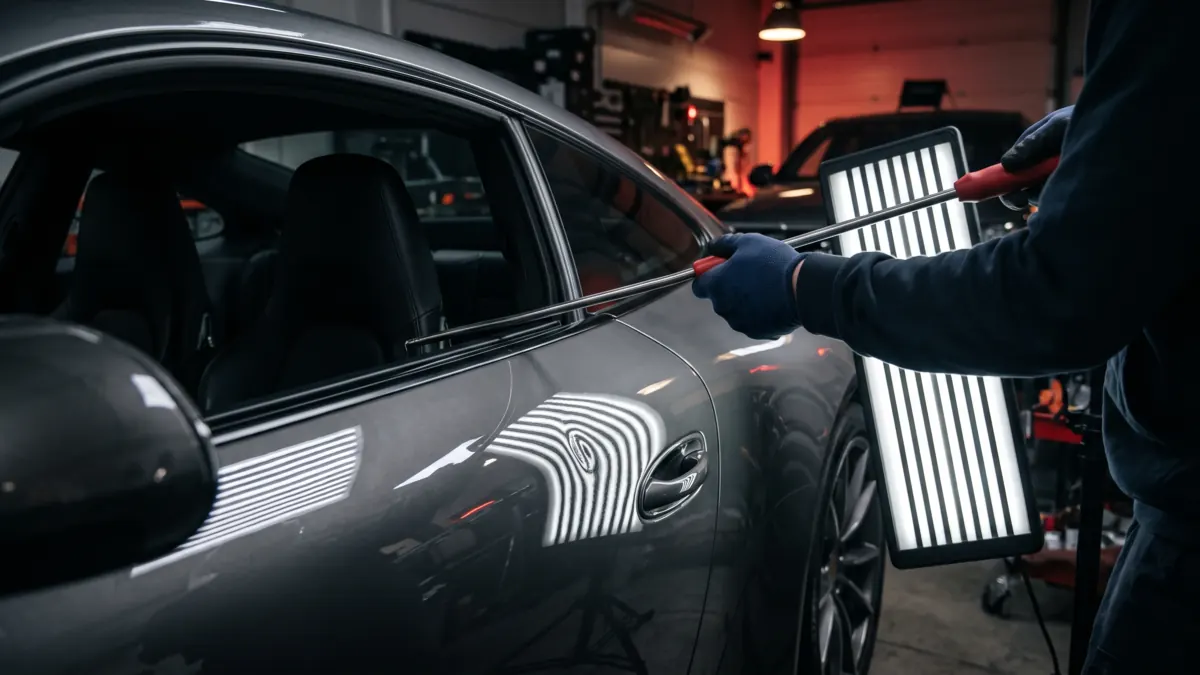
A PDR technician reads the dent under a striped light board, reaches behind the panel with long steel rods or uses glue-pull tools on the outside, and works the metal back to its original shape in small moves. No filler, sanding or paint is used, so the factory finish stays in place.
Good candidates
- Door dings from parking lots
- Round, shallow dents without broken paint
- Hail damage on hoods, roofs and trunk lids
- Soft creases on doors and fenders
When it needs conventional repair
- The paint is cracked, chipped or flaking around the dent
- A sharp crease or stretched metal
- Dents on a panel edge or a double-walled area the tools cannot reach
- Previous body filler in the area
A quick check you can do
Look at the dent at an angle in good light. If the paint has no cracks and the dent has smooth, rounded edges, it may be a PDR candidate. A sharp line, a crease you can feel, or broken paint usually means conventional repair.
Hail and insurance
Hail damage is usually handled under the comprehensive part of an auto policy, not collision. Check your own policy and deductible before filing, and get an inspection so the estimate reflects whether the dents can be fixed with PDR.
Frequently asked questions
How do I know if my dent can be fixed without paint?
If the paint is not cracked and the dent has smooth, rounded edges, it may be. An inspection under a light board confirms it.
Is PDR used for hail damage?
Yes. Hail dents are one of the most common uses of PDR when the paint is not broken.
This guide is general information, not legal or insurance advice. Check your policy and current Florida law for your situation.